





Traveling in China is easier than ever, but many international visitors still wonder:
What apps do I need for China travel?
Which apps actually work for foreigners?
How can I pay, navigate, communicate, and find local services in China?
China has its own digital ecosystem, and having the right apps before arrival can make your trip much smoother.
You do not need dozens of applications. For most travelers, a small number of reliable tools are enough to handle daily payments, transportation, communication, and travel planning.
This guide covers the must-have apps for China travel, including essential apps for first-time visitors and useful tools for exploring China like a local.
Essential Apps for Traveling in China
| When to Use | Travel Need | China App | Similar Apps You May Know |
|---|---|---|---|
| Before Departure | Internet Access | eSIM / VPN Apps | Mobile data solutions you already use abroad |
| Before Departure | Mobile Payment | Alipay | PayPal / Apple Pay / Google Pay |
| Before Departure | Train & Travel Booking | Trip.com | Booking.com / Expedia |
| During Your Trip | Messaging & Communication | WhatsApp / Messenger | |
| During Your Trip | Maps & Navigation | Amap (Gaode Map) | Google Maps |
| During Your Trip | Taxi & Ride-Hailing | DiDi | Uber / Lyft |
| During Your Trip | Translation | Google Translate | Your usual translation app |
| During Your Trip | Restaurant Discovery | Dianping | Yelp / Google Reviews |
| During Your Trip | Travel Inspiration | Xiaohongshu (RED) | Instagram / Pinterest / TikTok |
1. eSIM Apps & VPN Apps
Best for: Staying connected in China
Having reliable internet access is one of the first things international travelers should prepare before visiting China.
A stable connection allows you to use:
- Payment apps
- Maps
- Translation tools
- Travel booking platforms
- Communication apps
Many visitors choose an international eSIM because it can be activated before arrival and avoids the need to purchase a local SIM card immediately.
A VPN may also be useful for travelers who want access to some familiar international websites and services while in China.
Before your trip, prepare your internet solution first — because almost every other travel app depends on having a connection.

2. Alipay
Similar to: Apple Pay, Google Pay, PayPal
Best for: Mobile payments and daily services
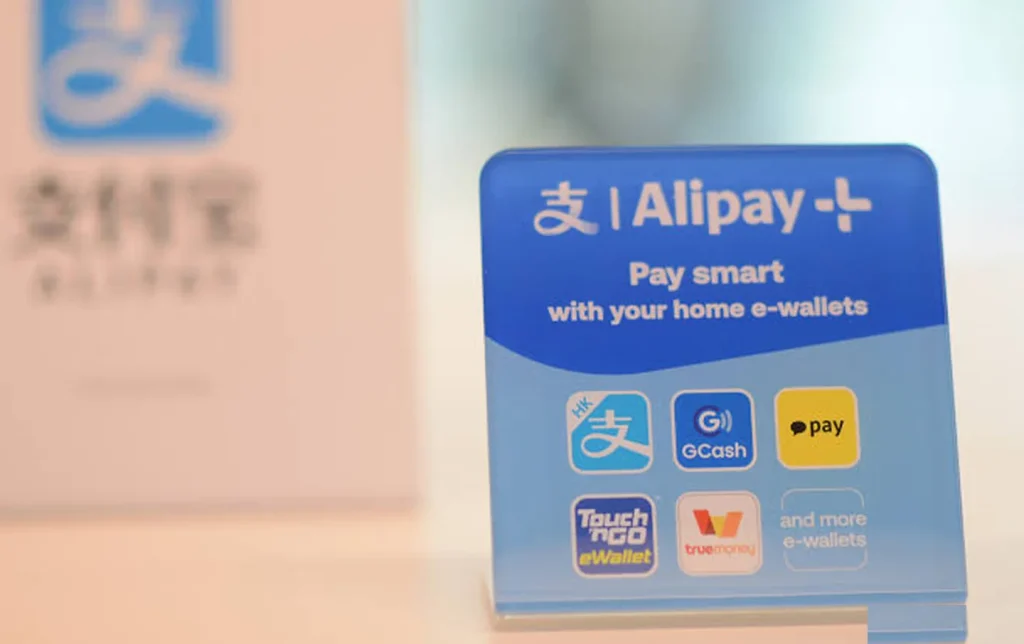
Alipay is probably the most important app for foreign visitors traveling in China.
China is a highly digital payment society, and QR code payments are widely used in:
- Restaurants
- Shopping malls
- Convenience stores
- Attractions
- Taxis
- Public transportation
With Alipay, international travelers can:
- Pay with mobile QR codes
- Link international bank cards
- Pay for daily expenses
- Access transportation services
- Search local businesses and services
Beyond payment, Alipay also works as a local service platform.
For example, if you already know the name of an attraction, restaurant, or hotel, you can search it directly in Alipay to find related information and services.
For most travelers asking “How can foreigners pay in China?”, Alipay is one of the first apps to prepare.
3. WeChat
Similar to: WhatsApp, Messenger
Best for: Messaging and local communication
WeChat is the most widely used communication app in China.
Although many visitors know it as a messaging app, it is also an important tool for travelers.
You can use WeChat to:
- Contact local guides
- Communicate with hotels
- Message service providers
- Receive travel information
For travelers joining a private China tour, WeChat is often the easiest way to stay connected with their guide during the trip.
While Alipay helps you pay, WeChat helps you communicate.

4. Amap (Gaode Map)
Similar to: Google Maps
Best for: Maps, directions, and local transportation
For navigation in China, Amap (also called Gaode Map) is one of the most commonly used local map apps.
It provides detailed information for:
- Walking routes
- Subway transfers
- Bus routes
- Driving directions
- Real-time traffic
- Local businesses
Compared with many international map services, Amap usually provides more detailed local information in Chinese cities.
For independent travelers wondering:
“What is the best map app for China?”
Amap is one of the most useful tools to learn before your trip.

5. DiDi
Similar to: Uber, Lyft
Best for: Ride-hailing and private cars
DiDi is China’s most popular ride-hailing platform.
It works similarly to Uber and helps travelers avoid common taxi problems, especially language barriers.
With DiDi, you can:
- Enter your destination in the app
- Request a private car
- Track your driver
- Pay digitally
It is especially useful for:
- Airport transfers
- Late-night transportation
- Traveling with luggage
- Visiting places where taxis may be difficult to communicate with

6. Trip.com
Similar to: Booking.com, Expedia
Best for: Trains, hotels, flights, and tickets
Trip.com is one of the most foreigner-friendly travel booking platforms for China.
You can use it to book:
- High-speed train tickets
- Hotels
- Domestic flights
- Attraction tickets
- Travel activities
For international visitors, booking train tickets is often one of the biggest concerns.
Trip.com simplifies the process with:
- English support
- International payment options
- Easy booking management
For many visitors planning a multi-city China trip, Trip.com is an essential travel app.
7. Google Translate
Best for: Translation during travel
Google Translate remains one of the most familiar translation tools for international travelers.
It can help with:
- Restaurant menus
- Signs
- Basic conversations
- Simple travel questions
Useful features include:
- Camera translation
- Voice translation
- Offline language packs
Before traveling, downloading the Chinese language pack can make the app more useful when internet access is limited.

8. Dianping
Similar to: Yelp, Google Reviews
Best for: Restaurants and local dining
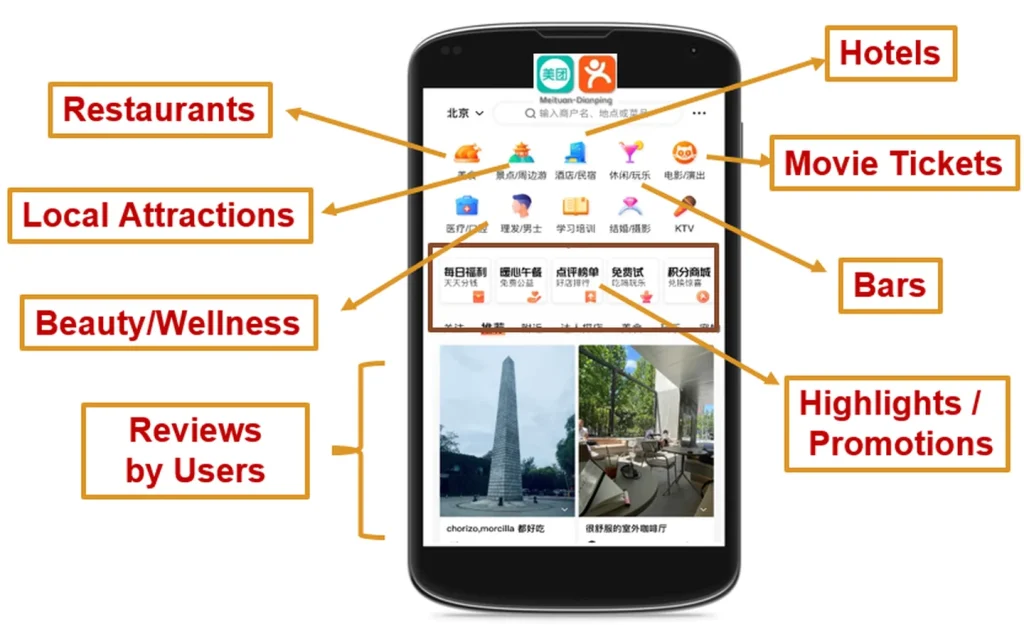
Dianping is often described as the Chinese version of Yelp, but it is much more deeply integrated into local life.
Travelers can use it to find:
- Restaurants
- Local dishes
- Reviews
- Photos
- Menus
- Popular food spots
For visitors who want to experience authentic Chinese food beyond tourist restaurants, Dianping can reveal many local favorites.
The main challenge is that much of the content is written for Chinese users.
9. Xiaohongshu (RED)
Similar to: Instagram, TikTok, Pinterest
Xiaohongshu, also known as RED, is a popular lifestyle platform in China.
Travelers use it to discover:
- Hidden restaurants
- Cafes
- Photo spots
- Local experiences
- Travel recommendations
It is useful during the research stage when you are deciding:
- Where should I visit in China?
- What local experiences are worth trying?
- Where do locals recommend going?
However, because much of the content is created for Chinese users, searching can require some patience.

Plan Your China Trip with Local Support
Travel apps can make your China trip more convenient, but they cannot replace local knowledge and thoughtful planning.
When visiting a new country for a limited time, knowing where to go, what to eat, how to arrange transportation, and which experiences are truly worthwhile can still be challenging.
At China Insight Travel, we create customized private tours for international travelers, helping you reduce the uncertainty of planning your China journey.

From itinerary design and transportation arrangements to local dining recommendations and cultural experiences, we make every part of your trip smoother and more meaningful.
Tell us your ideas and get a free customized itinerary from our local team.